How to Evaluate a Stock Before Buying
A good company, a fair price, and a well-timed trade are related—but they are not the same question. Evaluate each layer separately before risking money.
1. Understand the business
Write down how the company makes money, its main customers, competitors, and the reason revenue or margins could improve or weaken. If you cannot explain the thesis simply, keep researching.
2. Review financial quality
Look at revenue growth, profitability, cash generation, debt, dilution, and how results change across multiple periods. One strong quarter should not substitute for a trend.
3. Consider valuation
Compare valuation with the company’s own history, relevant peers, growth expectations, and risks. A low multiple can reflect genuine deterioration; a high one can demand unusually strong execution.
4. Separate the investment from the entry
A company may be attractive while the current entry is extended, illiquid, or immediately exposed to earnings. Define the time horizon and what would invalidate your reason for buying.
5. Calculate personal risk
Position size turns an opinion into account exposure. Before buying, define a stop or review point, estimate the dollars at risk, and confirm that the loss would fit your plan.
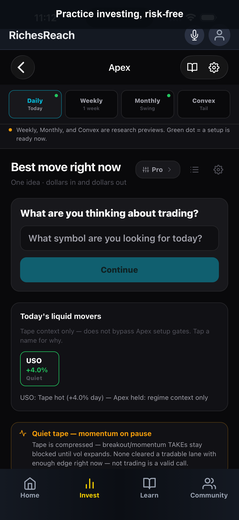
Worked example: separate the company from the trade
Assume a hypothetical company has growing revenue and manageable debt, but reports earnings in two days and its stock has already moved sharply above the intended entry. The business research may remain favorable while the immediate trade receives a WAIT. The trader can write down the price that would improve the setup, the filing or earnings information still needed, and the maximum account loss allowed.
This separation prevents “I like the company” from becoming an undefined entry with no exit plan.
Frequently asked questions
Which financial statements should a beginner review?
Start with the income statement, balance sheet, and cash-flow statement, then read management’s discussion and the risk factors in current SEC filings.
Does a low valuation mean a stock is cheap?
Not necessarily. A low multiple can reflect falling earnings, debt, dilution, cyclicality, or other risks. Compare assumptions, peers, and history.
How much should I buy?
Quantity should come from the planned loss and your risk limit. Use the entry and invalidation level to calculate dollars at risk before choosing shares.
Primary research sources

Marion Collins is the founder of RichesReach and documents the practical, risk-aware workflows behind Quick Check and Apex.
Move from research to a decision
Use RichesReach Quick Check to evaluate the setup and timing before you trade.
Try a Quick Check freeEditorial note: This checklist is general education. It does not determine whether any stock is suitable for you or guarantee a result.